
Watch our recent webinar as JD Gardner, CFA & CMT, and Brad Rapking, CFA, discuss our strategy on building edge in these simple structures.
Topics
- Portfolio Role for Buffered Funds
- Structural Edge in Aptus Buffered ETFs
- Mechanics of ABUF
Or contact us at info@apt.us
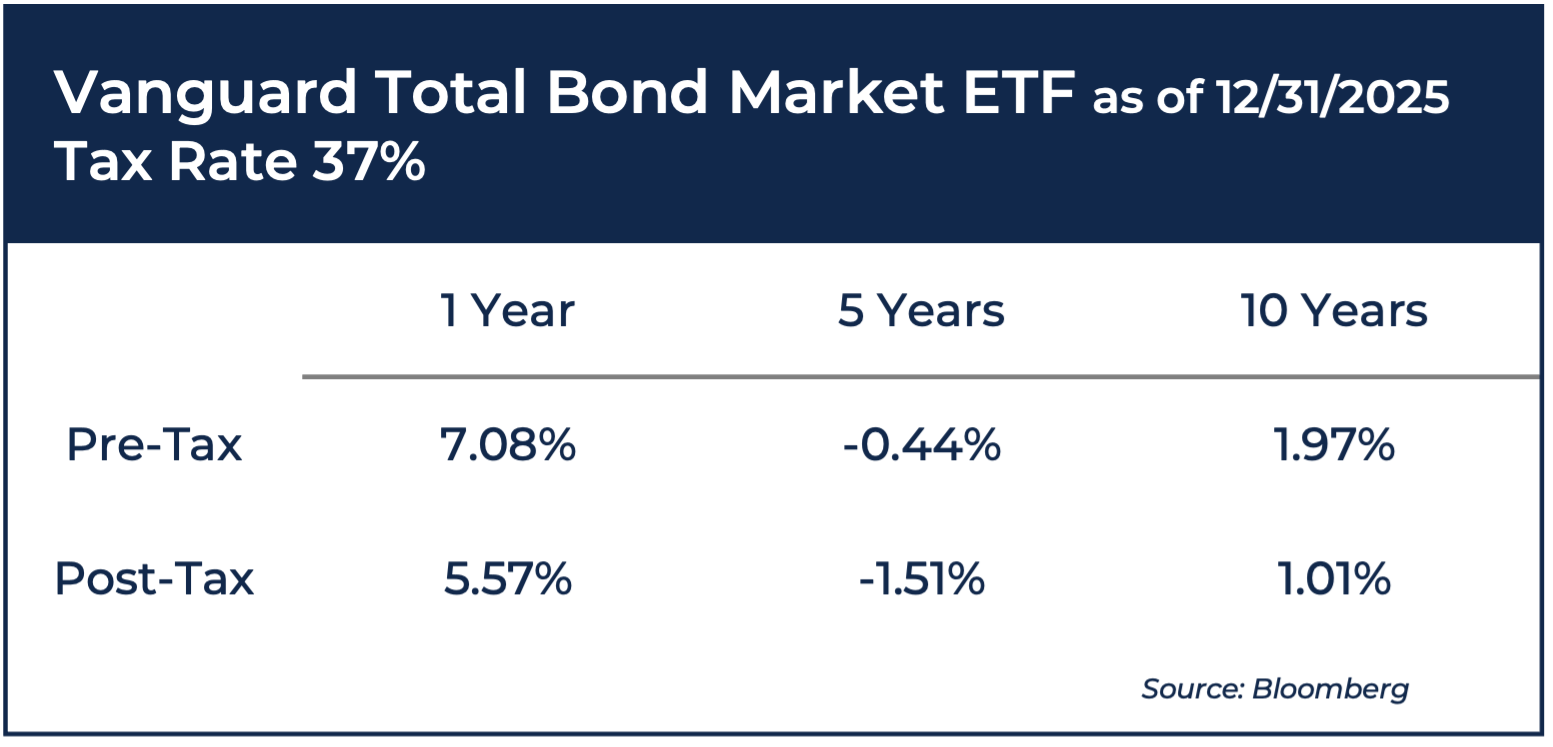
Buffered funds have characteristics unlike many other traditional investment products and may not be suitable for all investors. The performance data shown represents past performance, which is not a guarantee of future results. Investment returns and principal value will fluctuate so that investors’ shares, when sold, may be worth more or less than their original cost. Current performance may be lower or higher than the performance data cited. The performance of an index is not an exact representation of any particular investment, as you cannot invest directly in an index. For standardized performance of the Vanguard Total Bond Market ETF, BND https://investor.vanguard.com/investment-products/etfs/profile/bnd#performance-fees
The category average expense ratio of 78bps is for the US Fund Defined Outcome category, via Morningstar.
ETF Competitors represented on slide 16, “Concept to Reality”, were selected as like kind products. Each Fund including Aptus funds are structured defined outcome or buffer strategies for similar(twelve-month) one year outcome/investment periods. Each fund has a similar 15% buffer objectives and risks associated with each strategy. The key difference represented from Aptus Buffer products and competitors is the expense ratio for each fund and respective cap differences, which are represented in the chart on slide 16 of the webinar deck. Aptus Portfolio Managers may also use Fund assets to structure the option spreads in a manner to seek higher caps for an outcome period when compared to competitor funds. For further information on each Aptus and competitor Fund please refer to the Fund’s prospectus which can be located on each Fund’s respective website.
Full Transcript
Derek
Welcome everyone. Thanks for hopping on. This is a fun and exciting discussion today. Got a couple of our best here with JD Gardner, Founder and Chief Investment Officer. We got Brad Radking. Both of these guys, CFAs, if you’re a client, you’ve certainly interacted with them. Brad’s done a lot of the piping and legwork on a lot of our, both on the enhanced yield, but also on the buffered side. So he can get into all the nuts and bolts, but really just want to talk about how we’ve seen advisors use some of these funds to talk a little bit about why you use them in the first place. And then some of the things that we’ve done very unique to the space that we think bring a lot of extra value. So I’ll do a quick read of the disclosures and then let’s get these guys talking.
We don’t want to spend too much of your time after the close here. The opinions expressed during this call are those of the Aptus Capital Advisors Investment Committee and are subject to change without notice. This material is not financial advice or an offer to sell any product. Forward-looking statements are not guaranteed. Aptus reserves the right to modify its current investment strategies and techniques based on changing market dynamics or client needs. More information about Aptus’s investment advisory services can be found in its form ADV Part Two, which is available upon request.
I think we got no macro talk today. Maybe we can go a day without talking about some of that stuff. So fire away, guys.
JD
Perfect. Thanks, D-Hern. Thanks everybody for being here. We’re going to be short and sweet today. We had a big launch, which is really what we’ll touch on to wrap this. But the flow of everything is going to be just again, a little bit of our convictions around portfolio constructions, why we view buffers and defined outcome in general such a compelling way to solve some of the issues. And then we’ll talk about what we’re doing in this space specifically. Brad, feel free to interrupt, but I’m going to pop us up here. We locked in? Can y’all see that? Perfect.
Okay. All right. So I know we’ve covered this, but I think it’s worth saying. So a million bucks compounded at 20 years at 10%, turns into 6.7. A million bucks compounded for 20 years at 5% turns into 2.6. So there’s very few clients that would opt for a $2.6 million terminal value when 6.7 is potentially available. And we are advocates in telling anybody that will listen that we think the biggest issue in financial services today is allocation to fixed income.
So Aptus, in a nutshell, all we’re trying to do is to create strategies, solutions, services to help alleviate the anchor on compounded return potential that we think bonds are. To say that in other words: the allocation decisions we make, and hopefully this is big enough, I can blow it up. There’s text here, but this pie chart is really all that matters. So it’s fun to talk about headlines. Obviously, we’re in an environment where there’s new headlines about every two minutes, it feels like. Fun to talk about manager selection, individual stock selection and things like that. But the bigger driver of returns is asset allocation. So our entire business, everything we start with focuses on why does asset allocation matter and how are we impacting that? And again, the defined outcome space is a way to alleviate the reliance on bonds.
So the point to drive home with bonds, and I know that y’all have heard us say this, but the typical modern portfolio assumption is that bonds are positive carry vehicles and bonds, so they’re going to pay you while you hold them, and they are going to protect your equity risk. And our argument is, what if both of those things are not true?
And a lot of people just assume bonds have safely compounded their wealth. But this is a chart for the last 15 years that we’ve been bringing up where on a nominal basis, which is the green bars that you’re seeing, it looks like over 15 years, you’ve made 40-ish percent. But if you look at real returns, and especially real and after tax, you can see that you’ve had a negative compounding rate in the aggregate bond market.
And so there’s a ton of reasons for that, which we won’t get into. Please hit us with questions on why we’re so convicted that this is an issue. I don’t think that the environment that has caused these types of returns for fixed income is going to change anytime soon. And I think a lot of the things that we’re hearing, whether it’s turbulence overseas, whether it’s the AI stuff, all of that is going to lead to a more and more difficult environment for bonds to do those two things that most people are relying on them to do, which again is: generate positive real returns and protect equity risk.
So with that said, our whole business pitch is, “Hey, can we help create more stocks, less bonds, and do that in a way that is drawdown neutral?” Risk to us is mainly focused on drawdown. So if we accomplish that, I know I said this earlier, but to drive this point home, the goal that every client is ultimately playing is: how can I generate the highest compounded return possible? Because a higher terminal value, obviously within their risk constraints, their risk tolerance and capacity, but a higher terminal value of client wealth makes all financial planning look easier. And so what we’re doing, what we’re attempting to do is to provide solutions that you can own more stocks, less bonds, and be risk neutral. And when we say risk neutral, we’re focused on drawdown because we all know that’s what scares clients to death.
So with that said, and this is just a recap. This is why we’re so excited about the defined outcome space is when you give a client the ability to own the underlying equity risk, but you give a buffer on the downside, some confidence in the downside, it tends to free up the ability at the portfolio level to shift more towards equity risk and less fixed. So real quick refresher on what a buffer is. Let’s just assume it’s the S&P 500 exposure. So what we’re saying is we will give you the S&P exposure. The buffer is the protection below.
So on this, I don’t know if y’all can see my mouse or not, but here’s the buffer. So on a 15% buffer, you’re protected from zero to negative 15%. So if the S&P is down, forget fees and everything right now. If the S&P is down 20 and you have a 15% buffer, you should be down five at the end of this buffer’s reset.
Now, in order to get that protection, which every client loves to hear, either buffered 15% or whatever, the trade-off is you have to sacrifice the upside. So the simple structure of a buffer is: puts down below, you own the underlying, puts down below to protect you, and then you sell a call on the upside, and that call sets your cap. So the cap is, you’re going to hear us say cap a million times today. The cap is really what drives your ability to compound. It is incredibly important to have the highest cap possible given your buffer. And so what we’re going to get into is some of the cap data, why it’s important, and then obviously translate that to what we’re doing in the space to elevate the caps of our suite. So B-Rad, just you scream at me when you need me to move it.
Brad
Yeah. Thanks, JD. And yeah, I think you can’t reiterate enough how important it is to focus on the cap side of things. And I think this graphic does a good job of showing why we think that’s the case.
So what this is showing is looking at rolling 12-month periods, how often based on a theoretical cap level the market’s return over that rolling 12 month exceeds that cap. So we’re showing there on a, if your theoretical cap is 10%, a little over 60% of the time, the market returns higher than that. That means your return is capped out at 10%. Now, naturally, as you move that cap higher, your hit rate on that or the percentage of periods where you exceed that cap goes down. I think that’s pretty intuitive, which is why all of our efforts are looking at how can we improve the cap? Or what efforts can we make to improve the cap? So JD, if you want to move to that next slide, we’ll walk through what that means.
So this is just showing an expected compounded annual growth rate your CAGR based on different caps. Just like we’re showing on the last slide, the higher the cap, the higher the CAGR you’re expecting. So if you move up about 1% on your theoretical cap historically, it improves your compounded return by about half of the spread there. So going from 10 to 11, your improvement in your compounded return is 0.6%. Same thing going from 11 to 12, it’s about 0.57% better. Now, what happens if we can create a structure where we improve the cap by more than 1% relative to what peers are doing? That’s what our efforts are focused on. And we’ll dive in here on exactly how we’re doing that and what that means. So JD, if you go to that next slide?
The category average for expense ratio is about 78 BP. So we rounded that to 80 basis points here. We have some strategies that are not 30 BPs, but we’re going to use that as an illustration as well. But what if we say we’re going to take that 50 basis points in expense ratio savings and reinvest it into the structure of the fund? So we call that our structuring costs. So all in, our total costs are in line with, in this example, in line with what the category averages look like.
What that’s saying there when I’m looking at total cost, that means if the S&P, if it’s a buffer fund on an S&P, which is what we’re doing, the S&P is exactly zero return throughout the year, you would expect your strategy to be down 0.8%. That’s your total all in cost. Now, from our perspective, we’re taking that 50 basis points, using it to improve the structure, and that translates into, you guessed it, a higher cap.
So in this example here, we’re looking at a gross cap from a category average at about 12% there, and then looking at reinvesting that 50 basis points of fee savings, getting a hypothetical or a theoretical cap of 13.5, well, you’re looking at 150 basis-point spread.
Now, JD, if you go back to that last slide we were just looking at, we remember if we improve the cap by 1%, it’s about 0.5.6% benefit. Well, if we can improve it by 1.5%, now you’re looking at a 0.75% plus type of benefit from a compounded growth rate perspective. So a long way of saying relative to peers, we would expect in periods where the market is flat or below the cap to be roughly in line with peers. And when the market is in that right tail, the good environments where we show a little bit over half the time the market does on a rolling calendar basis or rolling 12-month basis, we’re going to be in that much better cap range, and that is what matters the most and improves compounded returns.
JD
Yeah. And to jump back here, because I want to make sure this is crystal clear, most of the structures that you’ll see, this is a collared strategy. A buffer is a collar where you’ve got puts below and you’ve got calls up top. The reason for selling a call is to fund the cost of the buffer. Most of the competitors that you see or our competitors and structures you see out there, they operate in a costless way. So when you think about the structure, they set the known variable, which is the buffer. And then what they have to solve for is let’s say they protect, they create the buffer by spending $1. Well, they have to go solve for that $1 by selling calls. So they are going to sell calls at wherever the level is to generate $1, to effectively mean there’s no outlay for the protection. The 15% buffer’s there, it was funded by a call.
So what we are doing that is different is we are saying we have an advantage on the expense ratio rather than just take that expense ratio advantage. In this example, just for crystal clear, strategy A, 15% buffer is an identical strategy to strategy B in terms of what it’s designed to do, but strategy A has no structuring cost and everything is expense ratio versus the way that we think makes more sense is to say, “Hey, look, we’ve got an advantage on expense ratio rather than just pass 50 BPs to a client, what if instead of making a costless collar, we spend 50 basis points.” And to Brad’s, this is a hypothetical example, we’ll get to real numbers in a second, but the hypothetical example is why would we spend 50 BPs on structuring? Well, if we get more than 50 BPs back on a lift in the cap, that’s why we would spend 50 BPs. And that’s effectively what we’re doing. Anything else to add on that, Brad?
Brad
Yeah, and I think the most important part there is we’re taking a 50 basis point fee savings, and rather than just having a compounded return that you would expect to be about 50 basis points better than the category average, we would expect over longer periods that compounded growth rate to exceed the difference in fee, not just the difference in fee. So the structuring kind of creates a little bit of secret sauce there to improve compounded returns.
JD
Yep. Yeah. And just to be clear, we are not overspending on protection. There is a 50 basis point spend on purpose because the caps should be elevated.
So what’s happened, we’ve launched four quarterly 15% buffers on the S&P. Last week we launched, let me just pop to this, what we’re calling kind of an easy button for client portfolios, which is a laddered version. So before I go to the slide and lose any focus here, a laddered version … So we have quarterly buffers, 15%. So every quarter, they’re annual resets. So if you have something that resets every December, it doesn’t reset again until December or April or whatever it is. Well, you’re exposed, and most of y’all know this if you’re tuned in, you’re exposed to the path dependency of this structure because it only resets once a year.
But by having quarterlies and having a laddered version that owns roughly 25% of each version of these, you reduce the path dependency that’s embedded with each individual structure. So we think this makes it a lot easier, especially if your business is operated on a model chassis, it’s easier to get buffered exposure without a lot of the headaches. So Brad, you want to jump in?
Brad
Yeah. And I know you’re a native Alabama person, so path dependencies, the fancy term that you use. Me from Ohio, I’ll go with the timing risk is what the other way you could refer to it as of, hey, if you don’t invest on the exact outcome period dates, there’s no certainty in the outcome that you’re looking at. So you can have a period where over the last 12 months the S&P’s up 12, but then if you shift it a month forward or a month back, your return could be drastically different based on the market’s path or the path dependency that it takes.
The laddered version of this looks to own each of the underlying annual reset quarterly funds at equal weight. So we’re taking that path dependency or that timing risk and really mitigating that because you’re always within a quarter of one of the funds resetting its annual outcome period, and you’re never more than a quarter removed from the last one resetting for the annual outcome period. So you’re looking at that, taking away that timing risk, and it’s still giving you the same market participation on each of the weighted funds underneath the hood and that downside risk mitigation that you’re buying a buffer fund for.
And then the last piece there is you’re taking our structure that has a structural cap advantage and putting it in there. So you’re going to look at our fund and our weighted cap versus the floor is going to be much more attractive relative to the other offerings because of the structuring advantages due to the cost savings that we have.
JD
And I think you said Alabama people are smart a few minutes ago?
Brad:
Absolutely.
JD
Thank you for that. We do think the laddered buffers solve a lot of problems because if you think about our lineup, if you called interested in a 15% buffer that we offered, well, depending on when you call and what’s going on in the market, you could have … October may look less attractive than July. And April may be the least attractive, but January may look great. It all depends on when the structures were set and, again, that timing or path dependency risk.
And what we’ve seen before buffers were launched is we’ve seen that head scratching and there’s a ton of thought that has to go into it’s not an easy button, “Hey, I’m allocating to this buffer.” If there’s other iterations of the buffer, you have to be aware of what’s out there and where the risk is and where the return is. And that relationship in each structure, a laddered structure solves a lot of that and you see it just as it’s always rolling roughly 25%. So we think that solves a ton.
Now, another big thing is we’ve showed the graphic, and this is where we’ll wrap, but we’ve showed, we’ve talked a lot about, again, I’m going to pop this slide up, the expense ratio advantage that we have, taking the delta between what we’re doing and what the industry’s doing, and then putting that delta, the difference, the advantage into the structuring cost, what that actually gets us. This is the latest reset. Is this big enough, Brad? Can you see it?
Brad
Yes.
JD
Okay. Taking the latest reset, I’ll let you walk through the numbers, Brad, and I’ll jump in.
Brad
Yeah. So the left side of this is looking at our January reset. So we reset at the end of December. You can see our net gross and net cap, the advantage that we discussed in terms of real-time numbers on that side. We expect that to be a durable advantage over time. And we saw that again in April, where if you’re looking at our net cap is a little bit more than 2.5%-ish better than peers on that side. So just another example of the benefits of the structure that we’re looking at.
JD
And I think the important point to drive home on these structures is until competitors either lower expense ratio or start spending on the structure, the biggest thing to stress in these, we’ve got updates for new things that we’re bringing to the market, but the biggest thing to stress in this is we talk a ton about being better in the tails. These funds specifically, if you think about right tail events, left tail events, and then somewhere in between, we should be very similar on the downside, but we have a really powerful advantage on the upside. So there’s an asymmetric profile with us compared to competitors where we’re keeping risk in check, if you think about what I said earlier, but we’re opening more potential upside that.
So as a standalone strategy versus what’s out there, we feel really convicted that our structures make a ton of sense. But again, these are just tools in the broader framework that we’re trying to communicate that, “Hey, you really can’t rely on fixed income to produce returns and protect your equity risk. How can you get clients comfortable with injecting different ways to allocate to more equity risk in a portfolio?” And we’re not going through the macro reasons for that, but hopefully that is crystal clear.
And we’re obviously excited about the future launches that we’ll have. We’ll have more to say on that at some point soon. But for any of these, any of you using the 15% buffers or interested in the 15% buffers and want to know more about ABUF, what we just launched, please reach out. These numbers are pretty compelling when you look at them and think about the net caps. I know we’re a broken record, but when you have buffers, assuming buffers are apples to apples, the cap is what matters and you should be trying to solve for the higher cap.
D-Hern, anything you want to add before we wrap?
Derek
We got one question in. I mean, if people want to fire away with questions, we’re 22 minutes in, so I’ll ask you guys this one. “I’ve used laddered buffers and paid 80 to 90 basis points. I know you’re not running a nonprofit. What am I giving up with yours at 30 basis points?”
JD
You want to take that?
Brad
Yeah, I would say you’re not giving up anything and you’re getting more upside. I don’t know if I could be any more succinct than that.
Derek
I mean, I’ve been asked that question, And we’re an options-based shop. You guys are in there on a daily, hourly basis looking at the volatility structure and the pricing and everything. These trades are like, what, once a year? I mean, it’s pretty simple. You’re not in there spending hours per day studying the next trade you’re going to do on these things?
Brad
Yeah, we don’t have any … We stripped out sub-advisor costs and we haven’t embedded a lot of other costs that some peers may have baked into their expense ratios. We wanted to give the lowest cost we thought was feasible from our side and turn that into, in my opinion, a superior product.
JD
And superior is defined by net caps in this space. Yeah, these things, thinking about just to elaborate on that, because options can be a foreign language to a lot of people. But what we’re doing in other strategies, there’s some complexity there. What we’re doing in the defined outcome space and the buffers, it is about as simple as you can get in the buffered space, and therefore we just don’t think it requires … We think 25 to 30 basis points is what it requires to get it done.
And obviously we expect our strategies to scale in terms of assets under management as more and more people … Defined outcome is going to grow. We’re very convicted in that and we feel like more and more people will uncover what we’re doing or discover what we’re doing. And that’s a good thing for assets for us, which obviously makes it easier to run a profitable business because we are not a nonprofit.
Derek
Awesome. I mean, I think we’re good. Appreciate you guys coming on to explain some of this, and I know clients will appreciate it.
JD
Definitely. Hopefully it’s a decent recording to send out, but we would welcome any conversation, any questions. We are here. We’ve got more exciting things in the pipeline, but this is a space that we expect to grow and this is a space that we want to be one of the bigger players in. So we’re going to continue to try to build out what we view as the meat and potatoes of the space and offer as good of a price point and as good of an outcome as possible for shareholders. So please hit us if you’ve got any concerns, questions, or opportunities.
Derek
Awesome. Thanks guys.
JD
Thanks, Derek.
Brad
Thanks everybody.
Full standardized performance figures can be viewed at https://aptusetfs.com/
A Fund will not terminate after the conclusion of the Investment Period. After the conclusion of an Investment Period with respect to a Fund, another will begin. There is no guarantee that the structured outcomes for an Investment Period will be realized.
The structured outcomes may only be realized if you are holding shares on the first day of an Investment Period and continue to hold them on the last day of that Investment Period. If you purchase shares after an Investment Period has begun or sell shares prior to an Investment Period’s conclusion, you may experience investment returns very different from those that the Fund seeks to provide. If the Investment Period has begun and the Fund has increased in value to a level near to the Cap (as defined below), an investor purchasing at that price has little or no ability to achieve gains but remains vulnerable to downside risks. Similarly, if the Investment Period has begun and the Fund has decreased in value beyond the pre-determined buffer (as described below), an investor purchasing shares at that price may not benefit from the buffer. There is no guarantee that a Fund will successfully achieve its investment objective.
Fund shareholders are subject to an upside return cap (the “Cap”) that represents the maximum percentage return an investor can achieve from an investment in a Fund for an Investment Period. Therefore, even though the Funds’ returns are based upon the Underlying ETF, if the Underlying ETF experiences returns for an Investment Period in excess of the Cap, you will not experience those excess gains. A Fund’s Cap may rise or fall from one Investment Period to the next. There is no guarantee that a Fund’s Cap will remain the same upon the conclusion of its Investment Period.
Unlike the Underlying ETFs, the Fund itself does not pursue a structured outcome strategy. The buffer is only provided by the Underlying ETFs and the Fund itself does not provide any stated buffer against losses. The Fund will likely not receive the full benefit of the Underlying ETFs’ buffers and could have limited upside potential. The Fund’s returns may be limited by the caps of the Underlying ETFs.
Buffered Loss Risk. There can be no guarantee that the Underlying ETFs will be successful in their strategy to buffer against SPY losses. Despite the intended buffer, the Fund may lose its entire investment in an Underlying ETF. Each Underlying ETF’s strategy seeks to deliver returns (before fees and expenses) that match the price return of SPY (up to the cap), while limiting downside losses, if shares are bought on the day on which the Underlying ETF enters into the FLEX Options and held until those FLEX Options expire at the end of each Investment Period. To the extent the Fund acquires shares of the Underlying ETFs in connection with creations of new shares of the Fund and during each rebalancing, the Fund typically will not acquire Underlying ETF shares on the first day of an Investment Period.
Capped Upside Risk. The Fund’s strategy seeks to provide returns that match those of the Underlying ETF for Shares purchased on the first day of an Investment Period and held for the entire Investment Period, subject to a pre-determined upside Cap. If an investor does not hold its Shares for an entire Investment Period, the returns realized by that investor may not match those the Fund seeks to achieve.
CAGR: The compound annual growth rate (CAGR) is the annual rate of return that shows how an investment grows from its beginning value to its ending value over time, assuming reinvested profits.
FT Vest, Innovator, and Pacer Swan ETFs were selected as the peer comparison universe because they are three of the most prominent and widely-recognized issuers of defined outcome buffer ETFs, and the specific ETFs shown (GDEC/GMAR, PJAN/PAPR, and PSMD/PSMR) each offer the same 15% downside buffer structure with annual one-year outcome periods that align with the reset dates of the Aptus January Buffer (JANB) and Aptus April Buffer (APRB). FT Vest and Innovator together represent over 85% of the buffer ETF market share by AUM, and Pacer Swan is an established issuer in the category. This selection provides a like-for-like structural comparison across the primary issuers offering equivalent downside protection parameters.
Past performance is not guarantee of future results. For more information on the Vanguard Total Bond Market ETF and its standardized performance, visit https://investor.vanguard.com/investment-products/etfs/profile/bnd.
The fund’s investment objectives, risks, charges, and expenses must be considered carefully before investing. Important information about the fund is available at aptusetfs.com or by calling 1-800-617-0004. Read it carefully before investing. Please refer to the Fund Document section of each Fund page to download a prospectus.
Investing involves risk. Principal loss is possible. The Funds are non-diversified, meaning they may concentrate their assets in fewer individual holdings than diversified funds. Therefore, the Funds are more exposed to individual stock volatility than diversified funds.
Shares of any ETF are bought and sold at Market Price (not NAV) and are not individually redeemed from the fund. Brokerage commissions will reduce returns. Market returns are based upon the midpoint of the bid/ask spread a 4:00pm Eastern Time (when NAV is normally determined for most ETF’s), and do not represent the returns you would receive if you traded shares at other times.
Distributed by Quasar Distributors, LLC.
Recent Comments